Popular Posts

Translate

Showing posts with label fatty liver. Show all posts

Fatty liver

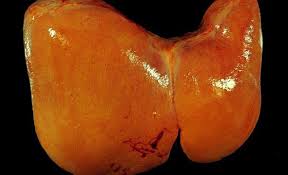
Fatty liver is just what its name suggests: the build-up of fat in the liver cells. Although this is not a normal condition, fat in the liver usually causes no damage by itself. However, on some occasions it can be a sign that other more harmful conditions are at work. 

Fatty liver may be associated with or may lead to inflammation of the liver. This can cause scarring and hardening of the liver. When scarring becomes extensive, it is called cirrhosis, and this is a very serious condition. Therefore, it is important that a physician thoroughly examine a patient with fat in the liver.
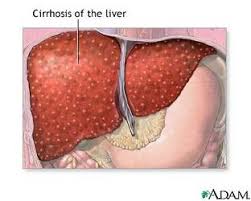
The term hepatitis means inflammation of and damage to the liver cells. Steato (pronounced stee-at´-toe) refers to fat. Therefore, steatohepatitis is inflammation of the liver related to fat accumulation. Heavy alcohol use can lead to fatty liver and inflammation, usually called alcoholic hepatitis. Steatohepatitis resembles alcoholic hepatitis, but it can and does occur in people who seldom or never drink alcohol. In this instance, it is often called nonalcoholic steatohepatitis or NASH. Both alcoholic hepatitis and steatohepatitis can lead to serious liver damage and cirrhosis.

Studies have shown that many people who are significantly overweight have developed, or will develop, steatohepatitis. It can also occur with rapid weight loss. Steatohepatitis has been connected to estrogen hormones in some women. In the case of diabetes mellitus, researchers believe steatohepatitis may develop only in those patients whose diabetes is not properly controlled.
In most instances, treatment of fatty liver and steatohepatitis requires control of the underlying conditions. This may include reduction of high blood triglycerides, good control of diabetes, or not drinking alcohol. In some cases, surgical reversal of intestinal bypass for obesity is required.

Since being overweight is by far the most critical factor, weight loss is the key to ridding the liver of fat. This is especially necessary if damage to the liver is occurring, and early signs of scarring are present on biopsy. High blood triglycerides and diabetes are also worse with obesity. So, when steatohepatitis is present with these conditions, people gain even greater benefits from losing weight. Losing weight can be difficult. However, it must be done because the alternative may be eventual cirrhosis and the need for a liver transplant.

Currently, studies are underway on certain drugs such as Actigall. This drug appears to reduce liver damage in cases of steatohepatitis. At this time, however, it is not certain how helpful these drugs will be. To repeat the point, losing weight is by far the most important treatment.

tags:The term hepatitis , the liver cells,fatty liver ,studies,

Liver detox I

These are three examples of herbal remedies or natural remedies for fatty liver disease:
  barberry
ginseng root
Dandelion.


Other causes of fatty liver disease include type 2 diabetes, insulin resistance, hyperlipidemia, high blood pressure, protein malnutrition, metabolic syndrome, and the long term treatment of certain drugs such as tamoxifen and hydrocortisone.

tags:liver, herbal,

The liver

The liver is the only internal human organ capable of natural regeneration of lost tissue ; as little as 25% of a liver can regenerate into a whole liver.Currently, there is no artificial organ or device capable of emulating all the functions of the liver.An irregularly shaped, dome-like solid structure, the liver consists of two main parts (a larger right lobe and a smaller left lobe) and two minor lobes.

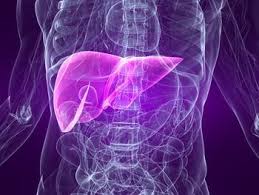
The liver is located just below the diaphragm primarily in the upper right part of the abdomen, mostly under the ribs,it also extends across the middle of the upper abdomen and part way into the left upper abdomen.This organ plays a major role in metabolism and has a number of functions in the body, including glycogen storage, decomposition of red blood cells, plasma protein synthesis, hormone production, and detoxification.A human liver normally weighs 1.44–1.66 kg (3.2–3.7 lb), [ 3 ] and is a soft, pinkish-brown, triangular organ.....


tag:liver,human liver,functions,natural,

Fatty liver


Fatty liver is the collection of excessive amounts of triglycerides and other fats inside liver cells.
Also called steatosis, fatty liver can be a temporary or long-term condition, which is not harmful itself, but may indicate some other type of problem. Left untreated, it can contribute to other illnesses. It is usually reversible once the cause of the problem is diagnosed and corrected.
The liver is the organ responsible for changing fats eaten in the diet to types of fat that can be stored and used by the body. Triglycerides are one of the forms of fat stored by the body and used for energy and new cell formation. 
The break down of fats in the liver can be disrupted by alcoholism, malnutrition, pregnancy, or poisoning. In fatty liver, large droplets of fat, containing mostly triglycerides, collect within cells of the liver.
The condition is generally not painful and may go unnoticed for a long period of time. In severe cases, the liver can increase to over three times its normal size and may be painful and tender.
Fatty liver can be caused by certain chemical compounds, nutritional, or endocrine disorders. Drugs or chemical compounds that can cause fatty liver include alcohol, tetracycline, cortisone, phosphorous and carbon tetrachloride. Of these alcohol is by far the most common cause. Inflammation usually accompanies exposure to these toxins and is responsible for the associated symptoms of fever, fatigue and jaundice.
Nutritional causes of fat in the liver result from starvation, obesity, protein malnutrition and intestinal bypass operation for obesity. In obesity, the fatty deposits are accompanied by some inflammatory changes and mild scarring of the liver.
The endocrine causes of fatty liver include diabetes mellitus and fatty liver of pregnancy. In both cases, a large amount of fat can be rapidly deposited in the liver leading to expansion of the liver with tenderness in the upper right part of the abdomen. In diabetes this occurs only in juveniles. Fatty liver during pregnancy occurs near term and may result in premature termination of the pregnancy.
Fatty liver can be present in patients with alcoholic hepatitis and cirrhosis or may be an isolated finding.
Present evidence shows that while fatty liver is usually present in excessive alcohol intake, it probably does not lead to the development of alcoholic hepatitis or cirrhosis. In fact, most individuals with alcoholic fatty liver do not develop the more serious forms of liver disease.
However, continued alcohol ingestion has been known to cause alcoholic hepatitis and cirrhosis.
Often, there are no symptoms associated with fatty liver. If there are symptoms, they can include pain under the rib cage on the right side of the body, swelling of the abdomen, jaundice, and fever. Symptoms that occur less often in alcoholic fatty liver, but more often in pregnancy related fatty liver, are nausea, vomiting, loss of appetite, and abdominal pain.

tags:Fatty liver,Fatty liver can be present in patients with alcoholic hepatitis 

Fat in the liver...


For years, scientists have warned people that having an apple-shaped figure or a beer belly is a health risk.
They said people with wide girths are more likely to have visceral or intra-abdominal fat, which increases their risk of diabetes, heart disease, stroke and some types of cancer.
But new research presented Sunday at the annual meeting of the Obesity Society shows that belly fat may not be the biggest bad guy behind some of the medical issues. "Fat in the liver is a more important indicator of health problems," says Samuel Klein, director of the Center for Human Nutrition at Washington University School of Medicine in St. Louis.
Klein and colleagues recruited 31 obese men and women and looked at their visceral fat, which surrounds the organs in the belly, and their liver fat. Some people had high amounts of liver fat; others had normal amounts.
 A normal liver contains 5% fat or less, but a severe fatty liver may contain up to 50%, Klein says. The latter is referred to as non-alcoholic fatty liver disease.

Using several different medical tests, the researchers found that people with fatty livers:
•Make more triglycerides, which are released from the liver into their bloodstream and can increase the risk of heart disease.
•Are more likely to be resistant to the action of their own insulin, meaning their bodies don't regulate blood sugar properly, which can lead to type 2 diabetes, Klein says.
 Over time, high sugar levels damage large and small blood vessels, leading to heart disease, stroke, nerve damage, amputations, blindness and kidney disease.
"We do not yet know whether the liver fat is causing these health problems or is simply a very good indicator of health risk," he says. "Even though it looks like visceral fat itself might not cause harm, it is often high in people with increased liver fat."
About 30% of adults and a third of overweight children and adolescents have too much liver fat, he says. If you are obese, 30 or more pounds over a healthy weight, you are at a higher risk of having non-alcoholic fatty liver disease.
The bottom line: If you're too heavy, it's a good idea to trim down, he says. A weight loss of as little as 2% to 5% can cause a marked reduction in liver fat.
In a related study, Elisa Fabbrini of Washington University School of Medicine found that severely obese people who lost weight after gastric bypass surgery significantly lowered the fat in the liver.
Fat in the liver,the fat in the liver.,marked
tags:reduction in liver fat,which are released from the liver,adolescents,hepatitis,

Popular Posts