Popular Posts

Translate

Showing posts with label chronic hepatitis. Show all posts

Fatty liver

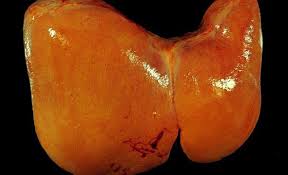
Fatty liver is just what its name suggests: the build-up of fat in the liver cells. Although this is not a normal condition, fat in the liver usually causes no damage by itself. However, on some occasions it can be a sign that other more harmful conditions are at work. 

Fatty liver may be associated with or may lead to inflammation of the liver. This can cause scarring and hardening of the liver. When scarring becomes extensive, it is called cirrhosis, and this is a very serious condition. Therefore, it is important that a physician thoroughly examine a patient with fat in the liver.
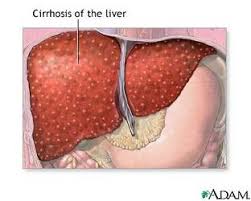
The term hepatitis means inflammation of and damage to the liver cells. Steato (pronounced stee-at´-toe) refers to fat. Therefore, steatohepatitis is inflammation of the liver related to fat accumulation. Heavy alcohol use can lead to fatty liver and inflammation, usually called alcoholic hepatitis. Steatohepatitis resembles alcoholic hepatitis, but it can and does occur in people who seldom or never drink alcohol. In this instance, it is often called nonalcoholic steatohepatitis or NASH. Both alcoholic hepatitis and steatohepatitis can lead to serious liver damage and cirrhosis.

Studies have shown that many people who are significantly overweight have developed, or will develop, steatohepatitis. It can also occur with rapid weight loss. Steatohepatitis has been connected to estrogen hormones in some women. In the case of diabetes mellitus, researchers believe steatohepatitis may develop only in those patients whose diabetes is not properly controlled.
In most instances, treatment of fatty liver and steatohepatitis requires control of the underlying conditions. This may include reduction of high blood triglycerides, good control of diabetes, or not drinking alcohol. In some cases, surgical reversal of intestinal bypass for obesity is required.

Since being overweight is by far the most critical factor, weight loss is the key to ridding the liver of fat. This is especially necessary if damage to the liver is occurring, and early signs of scarring are present on biopsy. High blood triglycerides and diabetes are also worse with obesity. So, when steatohepatitis is present with these conditions, people gain even greater benefits from losing weight. Losing weight can be difficult. However, it must be done because the alternative may be eventual cirrhosis and the need for a liver transplant.

Currently, studies are underway on certain drugs such as Actigall. This drug appears to reduce liver damage in cases of steatohepatitis. At this time, however, it is not certain how helpful these drugs will be. To repeat the point, losing weight is by far the most important treatment.

tags:The term hepatitis , the liver cells,fatty liver ,studies,

Symptoms hepatitis

Hepatitis Acute

Clinically, the course of acute hepatitis varies widely from mild symptoms requiring no treatment to fulminant hepatic failure needing liver transplantation. Acute viral hepatitis is more likely to be asymptomatic in younger people. Symptomatic individuals may present after convalescent stage of 7 to 10 days, with the total illness lasting 2 to 6 weeks.
Initial features are of nonspecific flu-like symptoms, common to almost all acute viral infections and may include malaise, muscle and joint aches, fever, nausea or vomiting, diarrhea, and headache. More specific symptoms, which can be present in acute hepatitis from any cause, are: profound loss of appetite, aversion to smoking among smokers, dark urine, yellowing of the eyes and skin (i.e., jaundice) and abdominal discomfort. Physical findings are usually minimal, apart from jaundice (33%) and tender hepatomegaly (10%). There can be occasional lymphadenopathy (5%) or splenomegaly (5%).


Hepatitis Chronic

Majority of patients will remain asymptomatic or mildly symptomatic, abnormal blood tests being the only manifestation. Features may be related to the extent of liver damage or the cause of hepatitis. Many experience return of symptoms related to acute hepatitis. Jaundice can be a late feature and may indicate extensive damage. Other features include abdominal fullness from enlarged liver or spleen, low grade fever and fluid retention (ascites). Extensive damage and scarring of liver (i.e., cirrhosis) leads to weight loss, easy bruising and bleeding tendencies. Acne, abnormal menstruation, lung scarring, inflammation of the thyroid gland and kidneys may be present in women with autoimmune hepatitis.
Findings on clinical examination are usually those of cirrhosis or are related to etiology.


tags:Chronic, hepatitis,Acute hepatitis,

Hepatitis B

Hepatitis B - This type of hepatitis spreads mainly through contaminated blood and blood products, sexual contact, and contaminated intravenous needles. Hepatitis B can lead to chronic hepatitis, cirrhosis, liver cancer, liver failure, and death.


Acute hepatitis is quite common in the US: 20 to 30 cases reported per 100,000 people each year.
Causes:
Common causes of acute hepatitis may include:
  • infection with a virus (viral hepatitis A, B, C, D, or E)
  • overdose of drugs (such as acetaminophen)
  • chemical exposure (such as dry cleaning chemicals)

Chronic hepatitis:
Some people do not recover fully from acute hepatitis and develop chronic hepatitis, as the liver continues to sustain more damage and inflammation. Hepatitis is considered chronic if symptoms persist longer than six months. Chronic hepatitis can last years.
Different forms of:
alcohol-induced chronic hepatitis - continued damage throughout the liver from heavy alcohol consumption.chronic active hepatitis - an aggressive inflammation and destroyer of liver cells, which usually leads to cirrhosis.chronic persistent hepatitis - a milder inflammation of the liver, which usually does not lead to cirrhosis.

tags:hepatitis,chronic,alcohol,


Journal of Thrombosis and Haemostasis

Treatment of Chronic Hepatitis C Infection in Patients with Hemophilia or Von Willebrand Disease with a Combination of Pegylated Interferon and Ribavirin

Chronic hepatitis C infection is a serious complication to treatment with plasma derived factor concentrates in patients with hemophilia and von Willebrand disease (VWD).
 In a prospective study to evaluate treatment effect of a combination of Pegylated interferon (PEG-IFN, PegIntron®, Schering-Plough) and ribavirin (Rebetol®, Schering-Plough), 90 patients (aged 16–70 years) with hemophilia or VWD, and measurable HCV-RNA in blood were included from all three Swedish hemophilia centres. Non-responders to earlier treatment with the combination, and HIV positive patients were excluded.
Twenty-two patients were scheduled for 6 months treatment and 68 patients for 12 months treatment according to study criteria. PEG-IFN (1.5 microgram/kg) was given s.c. once a week, and ribavirin (1000 mg) p.o. daily. Treatment was stopped prematurely in 20 patients (reasons: 10 non-responders after 3–6 months treatment, 9 side effects and 1 poor compliance).
So far we have HCV-data from 88 patients from end-of-treatment, and from 81 patients 6 months thereafter.
End-of-treatment response (= negative HCV-RNA) was 76% (68/90 patients) and sustained response (= negative HCV-RNA 6 months after end-of-treatment) 59% (53/90 patients). Hitherto sustained response has been seen in 27/51 patients (53%) with HCV genotype 1, 17/19 (90%) with genotype 2, 6/8 (75%) with genotype 3, 1/1 with genotype 4 and in 2/2 patients with unclassified genotype.
In conclusion, preliminary data show that treatment with PEG-IFN and ribavirin was successful in 59% of patients. As expected, treatment response was affected by the HCV genotype. Compared to our earlier experience of hepatitis C treatment, the use of PEG-IFN instead of standard IFN improved treatment response markedly.

tags:Journal of Thrombosis and Haemostasis,treatment with PEG-IFN and ribavirin,Chronic hepatitis C infection,Pegylated interferon and ribavirin,

treatment for chronic hepatitis


Specific treatment for chronic hepatitis will be determined by your physicians based on:
  • your overall health and medical history
  • extent of the disease
  • your tolerance for specific medications, procedures, or therapies
  • expectations for the course of the disease
  • your opinion or preference
Treatment of chronic hepatitis depends on the underlying cause of the disease. The goal of treatment is to stop damage to the liver and alleviate symptoms.
Treatment may include one/more of the following:
Antiviral Agent - When caused by hepatitis B or C, inflammation of the liver may be stopped with the antiviral agent interferon-alpha.
Corticosteroids - Corticosteroids may be used to treat chronic liver disease caused by an autoimmune disorder. Inflammation is suppressed, but scarring of the liver may continue.
Discontinuation of certain drugs - When chronic hepatitis is caused by certain drugs, discontinuing those drugs usually clears up any symptoms.
Preventing the spread of viral hepatitis:
Proper hygiene is the key to preventing the spread of many diseases, including hepatitis. Other preventive measures include:
  • vaccinations - A hepatitis B vaccine is routinely given to toddlers as part of their immunization schedule. A hepatitis A vaccine is available for people at risk for contracting the disease while traveling. (There are no vaccines for hepatitis C, D, or E at this time.)
  • blood transfusion - Blood transfusions are routinely screened for Hepatitis B and C to reduce the risk of infection.
  • antibody preparation - If a person has been exposed to hepatitis, an antibody preparation can be administered to help protect them from contracting the disease.treatment


tags:treatment for chronic hepatitis,liver,vaccinations - A hepatitis B vaccine,When caused by hepatitis,


Popular Posts