Popular Posts

Translate

Showing posts with label cirrhosis liver. Show all posts

Litijan syrup

Litijan and its protective matter protect liver; its active substances have regenerative effect on liver parenchyma within lipid degeneration intoxication, alcoholism and various infections. Syrup elements have strong anti-inflammatory effect and anti edematous effect putting liver function in normal mode.
Gall elements are in balance what leads towards stopping of production and melting of existing gallstones. “Litijan” is strong antioxidant (an oxidant is a molecule capable of slowing or preventing the oxidation of other molecules).“Litijan” syrup might be used in prophylactic way to keep liver and body healthy. 

It is dietary preparation prepared in a form of syrup to regularly maintenance hepatic duct. Such path comprises liver and gallbladder.
Among liver cells exist very fine, tiny canals which are gathering together making ductus hapaticus outlet. This system of canals is connected to gallbladder whose outlet makes ductus cysticus. Both canals are joining into ductus holeductus outlet which enters into small intestine - duodenum.
Bile is produced by hepatocytes in the liver, draining through the many bile ducts that penetrate the liver partly straight to small intestine and partly into specific reservoir, gallbladder.
Bile is stored in the gallbladder between meals and upon eating is discharged into the duodenum where the bile aids the process of digestion of lipids. Bile is composed of organic and inorganic matters. 
Inorganic matters are water, minerals and bicarbonate (serves a crucial biochemical role in the physiological pH buffering system); organic matters are bile acid, cholesterol, bile pigments, phospholipids, and mucin. Bile pigments are bilirubin and biliverdin (produce by bilirubin oxidation). They are in gallbladder. The bile acids are typically conjugated with salt or glycine and are produced by the liver from cholesterol. When bile components balance exists there is no possibility to form any biliary send or gallstone. Protective colloids are keeping bile and its components soft. Shortage of these colloids will induce sedimentation of some bile elements and components making biliary sediments - gallstones within the gallbladder. 

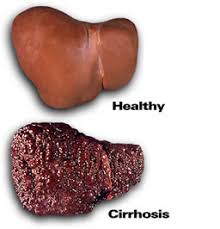
Different inflammatory process will contribute to s production as well as shortage in vitamins (making desquamation of epithelial canal cells). Inflammatory processes in hepatic path might be induced by infection and no infective matters. Changes are: liver swelling, wider or narrow biliary canals and biliary paths, thickness of bile bag walls, bended bile bag and cirrhosis. Cirrhosis is a consequence of chronic liver disease characterized by replacement of liver tissue by fibrous scar tissue as well as regenerative nodules (lumps that occur as a result of a process in which damaged tissue is regenerated), leading to progressive loss of liver function.


tags:Litijan syrup,Cirrhosis,liver,

Liver Cancer

Liver cancer is a disease includes uncontrolled growth of cells in the liver.

Liver cancer can be primary or secondary, also called metastasis. Primary cancer in the liver and in its early stages, there is only in the liver. People who have hepatitis B or C, viral infections of the liver or cirrhosis are more likely than others to develop primary liver cancer. In the early stage of primary liver cancer may cause no symptoms at all. More advanced disease can cause loss of appetite, weight loss, fever, fatigue and weakness.
Secondary Liver Cancer is the term for a cancer originating in another organ, such as the colon, stomach, pancreas, and breast, and then spreads to the liver. For the present at least two organs secondary cancer, treatment options are limited than for primary liver cancer. As the cancer grows, pain may develop in the upper abdomen on the right side and may extend to the back and shoulders. With advanced disease, signs of liver failure occur, including abdominal swelling and a feeling of fullness or bloating and jaundice, a condition in which the skin and whites of the eyes become yellow and the urine becomes dark.
Review of health care specialists at UCSF Medical Center.

Tags: liver of hepatitis B, C, in cirosis liver, liver cancer is Medium term cancer, hepatitis ABC


Coffee and hepatitis C

Coffee and hepatitis C....This study included 766 participants enrolled in the Hepatitis C Antiviral Long-Term Treatment against CirrhosisAmong chronic hepatitis C patients with advanced liver fibrosis or cirrhosis who did not respond to interferon-based therapy, those who drank 3 or more cups of coffee per day had a 53% lower risk of liver disease progression than non-coffee-drinkers, according to a study that will appear in the November 2009 issue of Hepatology.
Outcome rates declined with increasing coffee consumption, from 11.1 per 100 person-years [PY] for patients who drank none, to 12.1 per 100 PY for those who drank less than 1 cup a day, to 8.2 per 100 PY for those who drank between 1 to fewer than 3 cups a day, to 6.3 per 100 PY for patients who drank 3 or more cups a day.


Results from study suggest that patients with high coffee intake had a lower risk of disease progression.....

tags:hepoatitis C,

Cirrhosis of the Liver- Part I


Cirrhosis is a complication of many liver diseases that is characterized by abnormal structure and function of the liver.
The diseases that lead to cirrhosis do so because they injure and kill liver cells, and the inflammation and repair that is associated with the dying liver cells causes scar tissue to form.
The liver cells that do not die multiply in an attempt to replace the cells that have died. This results in clusters of newly-formed liver cells (regenerative nodules) within the scar tissue. There are many causes of cirrhosis; they include chemicals (such as alcohol, fat, and certain medications), viruses, toxic metals (such as iron and copper that accumulate in the liver as a result of genetic diseases), and autoimmune liver disease in which the body's immune system attacks the liver.


In cirrhosis, the relationship between blood and liver cells is destroyed. Even though the liver cells that survive or are newly-formed may be able to produce and remove substances from the blood, they do not have the normal, intimate relationship with the blood, and this interferes with the liver cells' ability to add or remove substances from the blood. In addition, the scarring within the cirrhotic liver obstructs the flow of blood through the liver and to the liver cells. As a result of the obstruction to the flow of blood through the liver, blood "backs-up" in the portal vein, and the pressure in the portal vein increases, a condition called portal hypertension. Because of the obstruction to flow and high pressures in the portal vein, blood in the portal vein seeks other veins in which to return to the heart, veins with lower pressures that bypass the liver. Unfortunately, the liver is unable to add or remove substances from blood that bypasses it.

 It is a combination of reduced numbers of liver cells, loss of the normal contact between blood passing through the liver and the liver cells, and blood bypassing the liver that leads to many of the manifestations of cirrhosis.
A second reason for the problems caused by cirrhosis is the disturbed relationship between the liver cells and the channels through which bile flows. Bile is a fluid produced by liver cells that has two important functions: to aid in digestion and to remove and eliminate toxic substances from the body. The bile that is produced by liver cells is secreted into very tiny channels that run between the liver cells that line the sinusoids, called canaliculi. The canaliculi empty into small ducts which then join together to form larger and larger ducts. Ultimately, all of the ducts combine into one duct that enters thesmall intestine. In this way, bile gets to the intestine where it can help with the digestion of food. At the same time, toxic substances contained in the bile enter the intestine and then are eliminated in the stool.

 In cirrhosis, the canaliculi are abnormal and the relationship between liver cells and canaliculi is destroyed, just like the relationship between the liver cells and blood in the sinusoids. As a result, the liver is not able to eliminate toxic substances normally, and they can accumulate in the body. 

To a minor extent, digestion in the intestine also is reduced.

Patients with cirrhosis may have few or no symptoms and signs of liver disease. Some of the symptoms may be nonspecific, that is, they don't suggest that the liver is their cause. Some of the more common symptoms and signs of cirrhosis include:
  • Yellowing of the skin (jaundice) due to the accumulation of bilirubin in the blood
  • Fatigue
  • Weakness
  • Loss of appetite
  • Itching
  • Easy bruising from decreased production of blood clotting factors by the diseased liver.
Patients with cirrhosis also develop symptoms and signs from the complications of cirrhosis that are discussed next.
Edema and ascites
Bleeding from esophageal varices
Hepatic encephalopathy
Spontaneous bacterial peritonitis (SBP)
Hepatorenal syndrome
Hepatopulmonary syndrome
Hypersplenism
Liver cancer (hepatocellular carcinoma)
The most common symptoms and signs of primary liver cancer are abdominal pain and swelling, an enlarged liver, weight loss, and fever. In addition, liver cancers can produce and release a number of substances, including ones that cause an increased in red blood cell count (erythrocytosis), low blood sugar (hypoglycemia), and high blood calcium (hypercalcemia ).Continue.

tags:Cirrhosis of the Liver,hepatitis C,Cirrhosis of the Liver,Liver cancer (hepatocellular carcinoma),


Liver cancer

 New comment on your post:Liver cancer is mostly common in males than females. It is quiet hereditary. Smoking is one of the major cause of liver cancer. Drinking alcohol is also a major cause of developing liver cancer. People with diabetes have highest risk of developing liver cancer. This is a very serious disease and there are many signs and symptoms and if properly detected can be treated as there are very low survival rates.....


Tags:Liver cancer,comment,

The symptoms of cirrhosis


The symptoms of cirrhosis:
  • The most common symptoms of cirrhosis are as follows:
  • Symptoms may not appear until complications of cirrhosis set in. Many people do not know they have cirrhosis until they have a complication.
    • Jaundice - Yellowing of the skin and eyes from deposition of bilirubin in these tissues. Bilirubin is a product of the breakdown of old blood cells in the liver.
    • Fever
    • Vomiting
    • Diarrhea
    • Itching - From deposition in the skin of products of the breakdown of bile
    • Abdominal pain - From enlargement of the liver or formation of gallstones
    • Abdominal swelling or bloating - From fluid retention
    • Weight gain - From fluid retention
    • Swelling in ankles and legs (edema) - From fluid retention
    • Difficulty breathing - From fluid retention
    • Sensitivity to medications - Due to impairment of the liver's ability to filter medications from blood
    • Confusion, delirium, personality changes, or hallucinations (encephalopathy) - From buildup of drugs or toxins in the blood, which then affect the brain
    • Extreme sleepiness, difficulty awakening, or coma - Other symptoms of encephalopathy
    • Bleeding from gums or nose - Due to impaired production of clotting factors
    • Easy bruising - Due to impaired production of clotting factors
    • Blood in vomit or feces - Due to bleeding of varicose veins caused by liver congestion
    • Hemorrhoids - Varicose veins in rectum due to liver congestion
    • Loss of muscle mass (wasting)
    • In women, abnormal menstrual periods - Due to impairment in hormoneproduction and metabolism
    • In men, enlargement of the breasts (gynecomastia), scrotal swelling, or small testes - Due to impairment in hormone production and metabolism
    • The symptoms of cirrhosis II

tags:The symptoms of cirrhosis ,hepatitis B,C,virus HBV,

Cancer liver II


Definition of liver cancer: Primary liver cancer is cancer that forms in the tissues of the liver. Secondary liver cancer is cancer that spreads to the liver from another part of the body.
Estimated new cases and deaths from liver and intrahepatic bile ductcancer in the United States in 2009:
New cases: 22,620
Deaths: 18,160

Anatomy of the liver; drawing shows the right and left  front lobes of the liver, bile ducts, gallbladder, stomach, spleen, pancreas, colon, and small intestine. The two back lobes of the liver are not shown.This booklet is only about cancer that begins in the liver. It isn't about cancer that spreads to the liver from somewhere else.
It's common for cancer to spread (
metastasize) to the liver from the colon, lungs, breasts, or other parts of the body. When this happens, the disease is not liver cancer. Instead, the cancer in the liver is named for the organ or the tissue in which it began. For example, colon cancer that spreads to the liver is metastatic colon cancer. It is not liver cancer.

In the United States, metastatic cancer in the liver is far more common than primary liver cancer.

People with metastatic cancer in the liver have different treatment options than those with primary liver cancer.


Cancer begins in cells, the building blocks that make up tissues. Tissues make up the organs of the body.
Normal cells grow and divide to form new cells as the body needs them. When normal cells grow old or get damaged, they die, and new cells take their place.
Sometimes, this process goes wrong. New cells form when the body doesn't need them, and old or damaged cells don't die as they should. The buildup of extra cells often forms a mass of tissue called a growth, nodule, or tumor.
Growths in the liver can be benign (not cancer) or malignant (cancer). Benign tumors are not as harmful as malignant tumors:
Benign tumors:
    • are rarely a threat to life
    • can be removed and usually don't grow back
    • don't invade the tissues around them
    • don't spread to other parts of the body

  • Malignant growths:
    • may be a threat to life
    • sometimes can be removed but can grow back
    • can invade and damage nearby tissues and organs (such as the stomach or intestine)
    • can spread to other parts of the body
Most primary liver cancers begin in hepatocytes (liver cells). This type of cancer is called hepatocellular carcinoma or malignant hepatoma.

Liver cancer cells can spread by breaking away from the original tumor. They mainly spread by entering blood vessels, but liver cancer cells can also be found in lymph nodes. The cancer cells may attach to other tissues and grow to form new tumors that may damage those tissues.

tags:Benign tumors,Malignant growths,colon cancer. It is not liver cancer,hepatocellular carcinoma or malignant hepatoma.Definition of liver cancer

Popular Posts